Modern Day Product Development Stages — From Product Vision to Product Delivery
The five stages good product teams use — vision, strategy, team objectives, discovery, and delivery — to understand the underlying customer problem and ship solutions customers love.
 Indranil Ghoshal·2021-03-23·8 min read
Earlier in my career, requirements arrived ready-made. The business team handed me features, those features sat on a roadmap already approved by clients or stakeholders, and senior management had set the direction after a round of conversations. The delivery window was usually six to twelve months.
That model broke down in four predictable ways:
- By the time the roadmap was delivered, the market had already moved on.
- The feedback loop was far too slow. We waited six to twelve months just to learn whether the outcome actually solved the customer's underlying problem — and whether customers were happy with it.
- Business viability stayed unproven. It was hard to tell whether the end solution made commercial sense until it existed.
- Feasibility was a gamble. "Can we even build this?" was a question we often answered halfway through the cycle, or at the very end.
There was a deeper question behind all of this: how was the roadmap decided in the first place? Was empirical data part of the decision? Was engineering in the room? Without engineers, it is very hard to know which solutions technology actually makes possible.
This article walks through the stages a strong tech product team uses to deliver on its objectives. The point of all of them is the same: understand the underlying customer problem, and ship a solution customers love. The prerequisite is an empowered team fluent in product discovery.
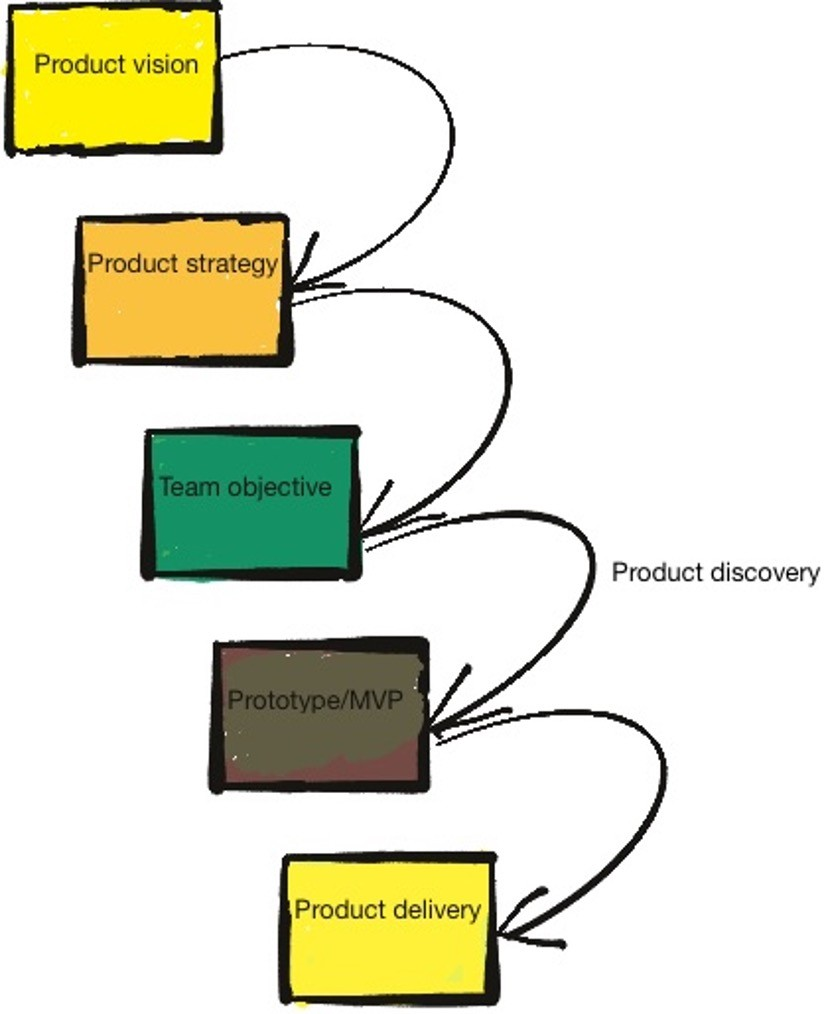
The journey from hard problem to great solution breaks into five connected stages: Product Vision, Product Strategy, Team Objective, Product Discovery, and Product Delivery.
Product Vision
A product vision describes what you want to achieve over the next three to five years. A good one names the positive change the product will create and answers why the product should exist at all. It reminds everyone building it what the shared goal is. Beyond alignment across teams and stakeholders, it sharpens strategic decision-making throughout development.
Two examples worth remembering — Google: to provide access to the world's information with one click. Instagram: to capture and share the world's moments.
Product Strategy
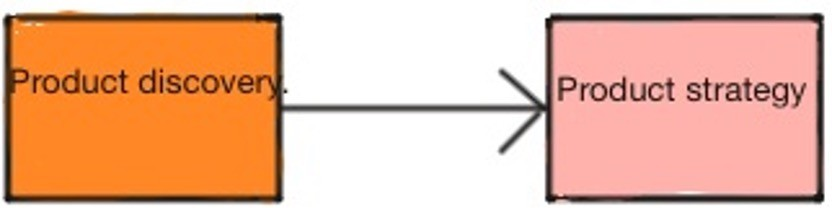
If the vision sets direction, the strategy is how that direction becomes real. It answers the practical questions: Who is this product for? What is it? Why does it stand out, and why would anyone buy or use it? Why is the company investing here?
Strategy is not fixed. It evolves as the product evolves — but always inside the boundaries the vision sets. Four areas matter when shaping it:
- Focus: decide what deserves work, and just as importantly, what does not.
- Insight: once the focus is clear, generate insight around it.
- Action: insight points to the actions worth taking.
- Management: bring in leadership that can support, guide, and mentor the process end to end.
Team Objective
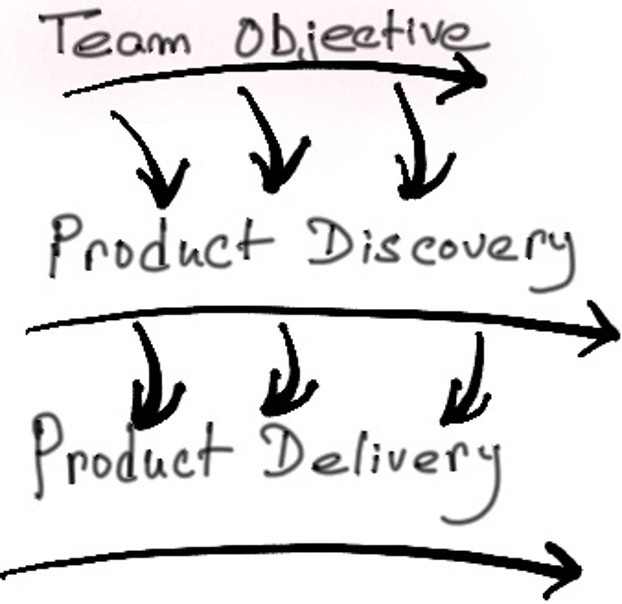
Team objectives are the specific, measurable commitments leadership assigns to teams to reach a desired result. The key word is outcome, not output. The strongest approach is to find the business objective that sits inside your product scope and take ownership of it. Treat the business and your stakeholders as partners, and open a dialogue about how you can help them get there.
A healthy objective sits comfortably inside the product vision — delivering it moves you a step closer to the product goal. If an objective does not fit the vision, something is off, and the product scope probably needs fine-tuning. Once the objective is set, define the key result — the North Star — that lets you measure the outcome.
Some example objectives:
- Boosting the efficiency of search services
- Increasing sales
Product Discovery
Discovery ends with a prototype, an MVP, or a small version of the real product — the solution customers love. Working from the team objective, the team and its stakeholders generate the best ideas, build prototypes, name the risks, and test them. You learn what the outcome will look like, you get real feedback from end users, you see whether it holds up commercially, and you find out whether you can actually build it.
Product Delivery
This is the final stage, and the safest one. The risks are already identified and user feedback is already in hand. The earlier stages have surfaced the topics and stories you need to write to ship the final version.
Conclusion
These five stages are how modern product teams understand what customers really need and deliver solutions they love — with everyone pulling in the same direction. Done well, the model does two things at once: it empowers the team, and it keeps management genuinely involved rather than merely approving.
Credit: Product Plan; Marty Cagan — EMPOWERED, INSPIRED; Roman Pichler; Teresa Torres.
Comments
Sign in to join the discussion. Comments are open to verified readers only.
Loading comments…
Prefer to reach out privately? Use the contact page.